Why We Backed the Last-Mile Revolution
Last-mile logistics is the most expensive, most inefficient, and most frustrating segment of the global supply chain. It accounts for more than 40% of total shipping costs despite covering only the final few kilometers of a package's journey. For the past decade, industry incumbents have treated last-mile delivery as a cost center to be minimized. We believe it is about to become the most competitive technology battleground in transportation — and we have been building our portfolio accordingly.
The Last-Mile Problem Defined
To understand why last-mile logistics is so difficult, it helps to understand what makes it structurally different from every other segment of the supply chain. Long-haul freight — whether by ocean container, rail, or truck — benefits from economies of scale: large volumes of identical goods moving over long distances on fixed routes with predictable timing. The economics are well understood, the infrastructure is mature, and the operational playbook is well established.
Last-mile delivery is the opposite of all of this. Every delivery is different: different address, different access requirements, different time sensitivity, different recipient behavior. The density of deliveries varies enormously by geography — urban cores are dense but congested; suburban neighborhoods are spread out; rural areas may have only a handful of deliveries per square mile. Recipients are unpredictable — they are not always home, they have strong preferences about delivery timing that they rarely share in advance, and they increasingly expect precision scheduling that was unimaginable a decade ago.
The result is that last-mile delivery has historically required a large, expensive, geographically distributed human labor force — couriers, drivers, and delivery personnel — operating individually-routed vehicles over unpredictable, inefficient paths. The labor cost alone accounts for the majority of last-mile expense. And as e-commerce volumes have grown exponentially, the inefficiency has compounded rather than diminished.
Three Technology Shifts Changing the Equation
What has changed in the past five years is the simultaneous maturation of three technology categories that each address a different dimension of the last-mile cost problem: autonomous last-mile vehicles, delivery drones, and AI-powered route optimization. None of these individually solves the last-mile problem. Together, they are beginning to create a fundamentally different cost structure.
Autonomous last-mile vehicles — sidewalk robots, autonomous delivery vans, and ground delivery robots — have moved from research prototypes to limited commercial deployments in multiple US cities. Starship Technologies, Kiwibot, and Nuro have all achieved operational density in specific service areas, demonstrating that autonomous ground delivery can work outside of controlled test environments. The current operational restrictions — limited speed, geofenced service areas, requirement for safety oversight — limit their near-term addressable market. But the cost per delivery in successfully deployed operations is already competitive with human delivery for dense urban environments, and it will improve as autonomy matures and deployment restrictions ease.
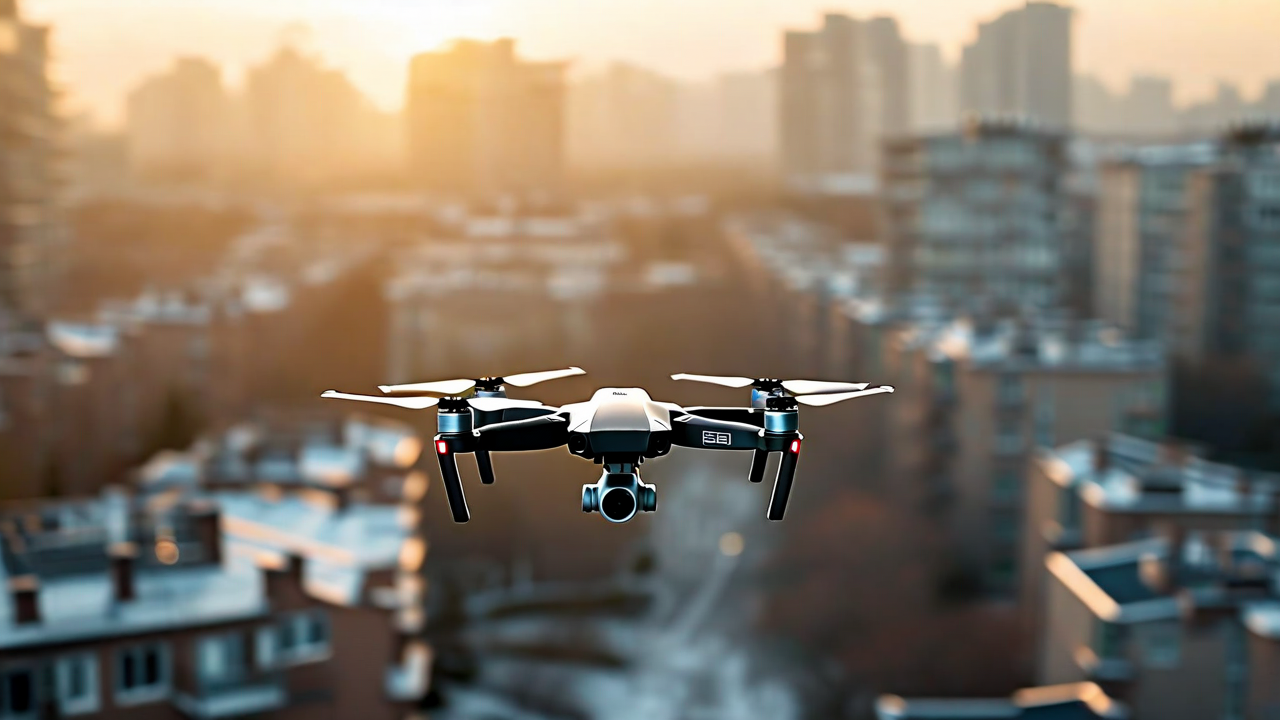
Delivery drones represent a fundamentally different trade-off: they bypass ground-level congestion entirely, operate at consistent speed regardless of traffic, and can deliver to locations that are difficult or impossible to reach by road. The FAA's BEYOND and UTM programs have enabled commercial drone delivery operations in a growing number of markets. Wing (Alphabet's drone delivery subsidiary), Amazon's Prime Air, and several specialized drone logistics companies are all in commercial operation, accumulating the operational data and regulatory track record that will be necessary for expanded approvals.
AI-powered route optimization may be the least dramatic-sounding of the three, but it is arguably delivering the most immediate commercial value. Modern route optimization platforms use machine learning to incorporate real-time traffic, historical delivery patterns, recipient behavior data, and vehicle capacity constraints to generate routes that are 15-30% more efficient than human-planned routes. At the scale of a major urban delivery operation, a 20% improvement in route efficiency represents tens of millions of dollars in annual savings. And unlike autonomous vehicles or drones, AI route optimization can be deployed immediately, on existing vehicle fleets, with no regulatory approvals required.
Our Investment Framework for Last-Mile
Airbound's approach to last-mile investing is shaped by a clear thesis about where sustainable competitive advantage can be built in this space. We are not investing in vehicle manufacturers — the hardware race for delivery drones and autonomous ground vehicles will be won by companies with the capital and manufacturing scale to compete with Alphabet, Amazon, and the major automotive OEMs. We are investing in the software, data, and network infrastructure that will be necessary regardless of which hardware platform ultimately wins.
The most important of these is last-mile operating system software: the platforms that manage fleets of mixed autonomous and human delivery vehicles, allocate work across different modalities in real time, and optimize the overall cost of delivering a given batch of packages. This is a complex, data-intensive problem that requires deep integration with carrier APIs, recipient preference systems, and urban infrastructure data. The company that builds the best last-mile operating system will be valuable to every carrier, every retailer, and every logistics network that operates in dense urban environments.
We are also investing in recipient intelligence platforms — systems that learn individual recipient behavior to predict delivery success, reduce failed delivery attempts, and enable the kind of precise scheduling that transforms last-mile from a cost center to a customer experience differentiator. Failed deliveries are an enormous hidden cost in last-mile logistics: industry estimates suggest that 5-10% of all delivery attempts fail on the first try, requiring a costly second attempt or package return. Even a 50% reduction in failed delivery rates represents a multi-billion-dollar annual saving at industry scale.
Finally, we are investing in the urban infrastructure layer that will be necessary for advanced last-mile modalities to operate at scale: micro-fulfillment networks, package locker infrastructure, and the real estate and operational technology that enables delivery density in urban environments without the congestion that currently constrains expansion.
Why the Timing Is Now
One of the questions we are most often asked about last-mile investing is why the timing is now, rather than earlier or later. The answer is a combination of technology readiness, economic pressure, and regulatory environment.
On technology readiness: the key enabling technologies — battery energy density, computer vision, sensor miniaturization, and edge computing — have reached the performance thresholds necessary for real-world deployment. Drone batteries can now sustain flight times sufficient for commercial delivery windows. Ground delivery robots can navigate complex urban sidewalk environments with acceptable safety performance. AI route optimization models have been trained on enough real-world data to consistently outperform human planners.
On economic pressure: the pandemic-driven surge in e-commerce has permanently elevated consumer expectations for delivery speed and precision, while simultaneously straining the labor capacity of traditional delivery networks. Carrier costs have increased significantly, and the labor supply for delivery roles is tightening in many markets. The economic pressure to find technology-based alternatives to human delivery labor has never been higher.
On regulatory environment: after years of cautious engagement, both the FAA and local transportation authorities are beginning to create frameworks that enable scaled deployment of novel last-mile technologies. The FAA's BEYOND program, the UTM (Unmanned Traffic Management) framework, and a growing number of city-level pilots with sidewalk delivery robots have created a pathway — slow and uncertain, but real — toward broader commercial deployment.
Portfolio Highlights and What We Are Seeing
Without disclosing specific confidential company details, we can share some patterns we are observing across our last-mile portfolio. The companies that are demonstrating the most compelling early traction are those that have chosen to go deep in a specific vertical — grocery delivery, pharmaceutical distribution, or B2B industrial parts — rather than attempting to serve all delivery use cases simultaneously.
Vertical specialization allows last-mile companies to build the recipient intelligence, route density, and operational playbooks that are specific to their use case before expanding horizontally. A company that has mastered grocery delivery in dense urban neighborhoods has built proprietary data about recipient behavior, optimal delivery windows, and temperature-sensitive package handling that is genuinely difficult to replicate. That expertise becomes a durable competitive advantage as they expand to adjacent categories.
We are also seeing strong signals from companies that are building network effects into their last-mile platforms — connecting delivery capacity from multiple providers (human couriers, autonomous vehicles, drones) in a single orchestration layer. The value of this model increases with every delivery modality added to the network, creating a compounding advantage for the platform that achieves early density.
Key Takeaways
- Last-mile delivery accounts for more than 40% of total shipping costs and is the most inefficient supply chain segment
- Three technology shifts are changing the economics: autonomous vehicles, delivery drones, and AI route optimization
- Airbound invests in last-mile software and infrastructure, not vehicle hardware manufacturers
- Vertical specialization — going deep in one category before expanding — is the playbook creating the most durable competitive advantages
- Failed delivery reduction is an underappreciated but enormous value creation opportunity
- The technology, economic, and regulatory environment have converged to make the current moment optimal for last-mile investment
Building last-mile logistics technology? We would like to hear from you. Also read our perspective on drone logistics.